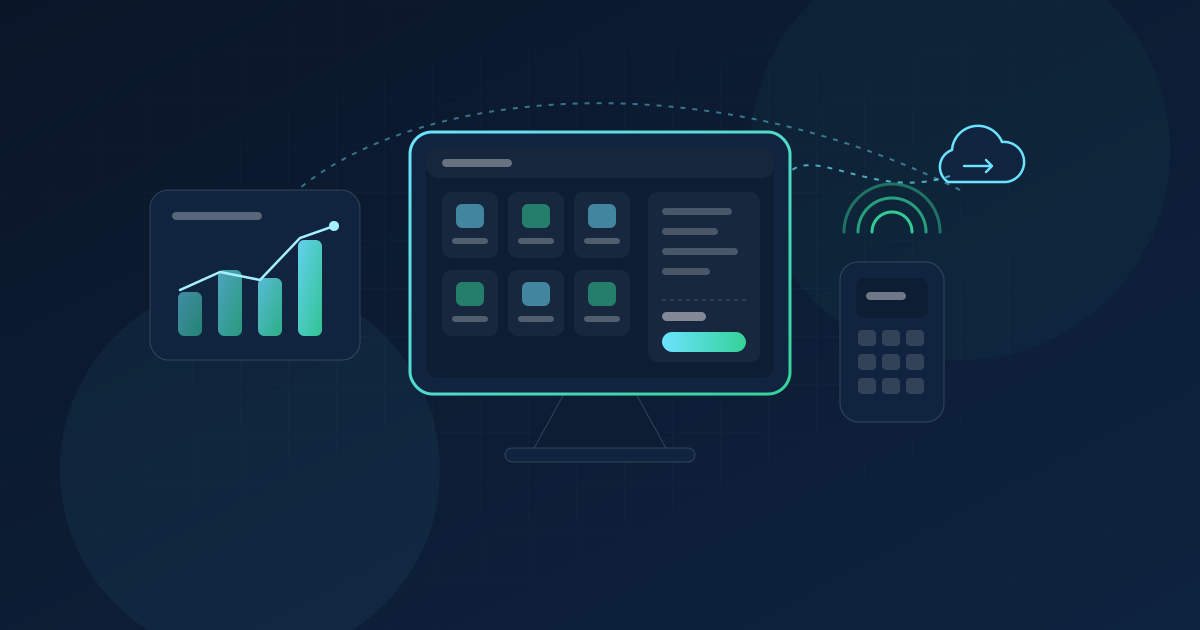
Modern applications talk to each other through APIs. Mobile apps, websites, payment systems, third-party services… all of them are connected by API calls. As these connections multiply, two questions become critical: How do we manage all these APIs centrally, and how do we keep them secure? The answer: an API gateway and API security.
What is an API gateway?
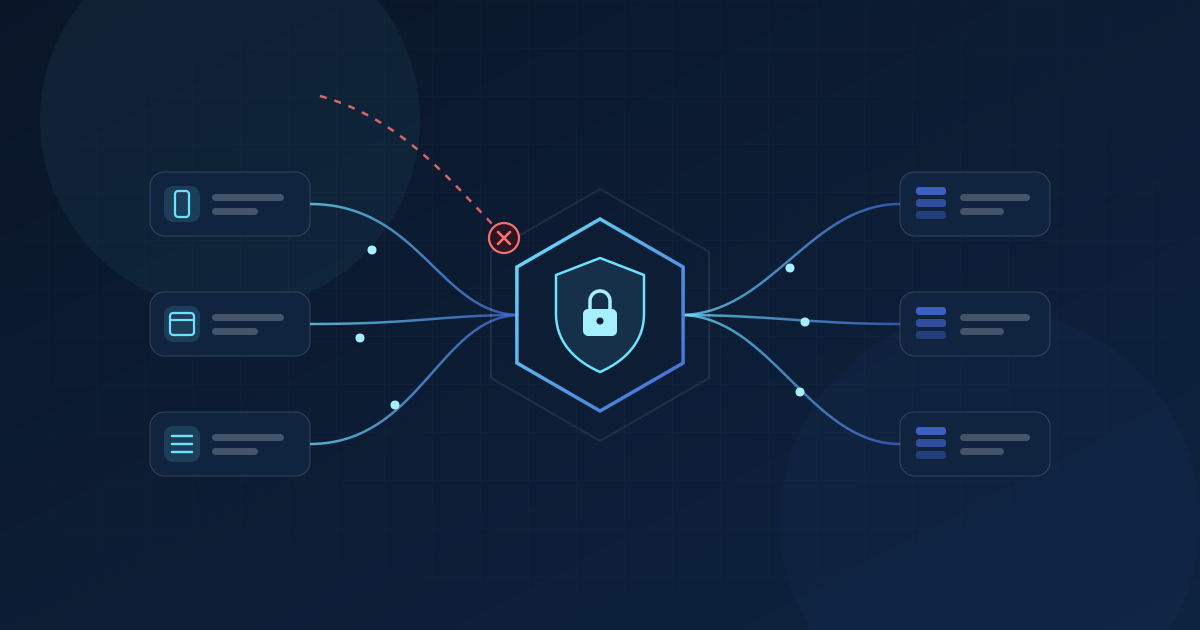
An API gateway is the central entry point that every API request from a client passes through first. It routes requests to the appropriate backend services and consolidates shared functions such as authentication, rate limiting, and monitoring in one place. That way, each service doesn’t have to handle these concerns on its own.
Core functions of an API gateway
- Routing — Forwards requests to the right service and abstracts the services away from the client.
- Authentication & authorization — Access control using methods such as JWT, OAuth 2.0, API keys, and HMAC.
- Rate limiting — Prevents excessive use and abuse.
- Load balancing & caching — Distributes traffic and speeds up repeated responses.
- Monitoring & logging — Makes the latency, errors, and volume of every call visible.
Why is API security critical?
APIs are the doors to your business data, which makes them a prime target for attackers. Unauthorized access, data leaks, denial of service through request flooding (DDoS), and injection attacks are the most common risks. The OWASP API Security list likewise points to broken authentication and authorization as the most frequent source of vulnerabilities.
The core layers of API security
- Strong authentication — Layered verification with JWT/OAuth 2.0, API keys, and HMAC.
- Rate limiting & quotas — Request limits per user or per service.
- Encryption (TLS) — Protecting data in transit and managing certificates.
- IP restrictions & bot detection — Blocking suspicious sources and automated attacks.
- Monitoring & alerting — Detecting abnormal traffic and errors in real time.
An API gateway and a WAF are not competitors
A WAF (Web Application Firewall) is a security shield that blocks attacks such as SQLi, XSS, and DDoS. An API gateway, on the other hand, is an API management engine that handles authentication, routing, rate limiting, and observability. They are not competitors but complementary layers; used together, they secure both the application layer and the API layer.
The Jekirdek approach
At Jekirdek, our in-house self-hosted API gateway and security platform, apiRuler, brings capabilities such as authentication, rate limiting, observability, and an AI proxy together in a single visual console. We provide end-to-end support so you can build an API infrastructure that is secure, observable, and fully under your control.