Do you have an idea for a piece of software but aren’t sure where to start, how long it will take, or where the budget will end up? For startups and SMEs, the biggest worry is often not the idea itself but turning it into a working product safely, quickly, and predictably. At Jekirdek Technology, we boil this journey down to two clear steps: AI-assisted prototyping and turnkey development.
Why AI-assisted prototyping?
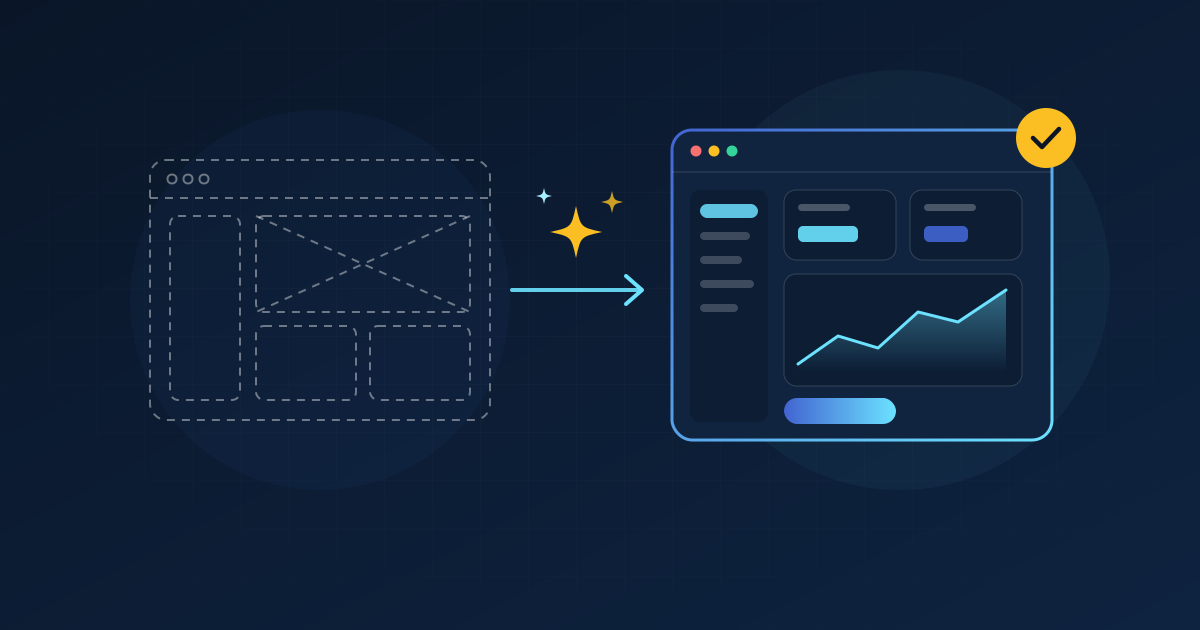
In traditional software projects, uncertainty lingers until the first working version. With AI-assisted prototyping, an idea becomes a clickable or working prototype within days. This early output delivers three things: it clarifies scope at the start of the project, gathers early feedback from users, and brings cost and timeline estimates closer to reality. In short, you can be sure you are building the right thing before making a major investment.
From prototype to turnkey product
Once the prototype is validated, it’s time for turnkey development. We manage every step under one roof, from discovery and analysis through architecture design, development, testing, integration, and deployment. That means the client doesn’t have to coordinate planning, budgeting, and delivery separately. The goal is simple: a product that is live and ready to use.
Scenarios from the field: when technology becomes business results
The representative scenarios below summarize our approach across different industries; we share them without client names, focusing on the technical essentials.
From disconnected systems to a single platform: ERP consolidation
A mid-sized business operating across multiple locations was managing its finance, inventory, and production processes in separate systems. With a modular, cloud-based ERP, we brought all modules together on a single database and integrated them with e-invoicing (Turkey’s GİB e-document system) and banking systems via REST APIs. The result: fewer manual reconciliations and real-time inventory visibility.
Sales and customer experience: CRM and call center
For a sales team that was losing opportunities in spreadsheets, we built a CRM pipeline running from lead to quote, and integrated the phone system (CTI) so the customer record opens automatically on incoming calls. With request management and SLA tracking, resolution times dropped and the conversion rate went up.
From the field to headquarters: mobile and dealer sales
For a team collecting field data on paper, we developed an offline-first mobile app that synced data automatically once a connection was available. For a brand with a large dealer network, we built a B2B ordering app, with dealer-level quota, target, and performance tracking integrated with the ERP.
Decision support and digitalization: reporting, online learning, and HR
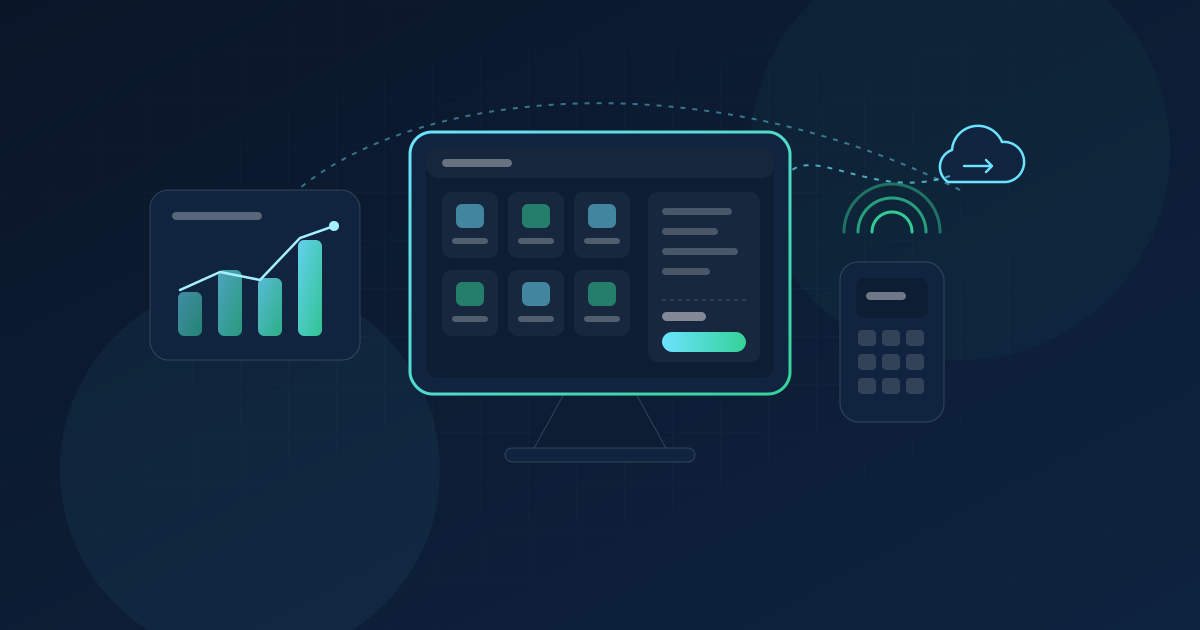
We consolidated the scattered data of a multi-branch business with ETL and turned it into widget-based dashboards with Excel/PDF export. We also developed an LMS-based e-learning platform for an educational institution and an HR platform covering recruitment, performance, and training for a growing company. In every scenario, the common thread is the same: reducing manual work and enabling data-driven decisions.
It doesn’t end at delivery: managed services and outsourcing
Software isn’t finished the day it goes live; that’s where the real work begins. Through our managed service, we take on the product’s maintenance, monitoring, and version and security updates under an SLA. When you need to grow your team quickly, we offer development capacity that scales with your needs through outsourcing and expert staffing. That way, you launch quickly and gain sustainable operations for the long term.
What does this mean for startups and SMEs?
This approach reduces uncertainty, shortens the time to a first release, and provides a solid foundation after delivery. It fits startup speed and SME budgets, and it is designed for those who want to move from idea to product, and on to running that product, with a single technology partner.