Hundreds of resumes in a hiring process, dozens of supporting documents in a loan application, pages of technical specifications in a tender… In many organizations, document evaluation is still done by hand, slowly, and with results that vary from person to person. AI makes this process both faster and more consistent.
Why is evaluating applications and documents so hard?
Documents arrive in different formats (PDF, scans, photos, Word), the same information sits in a different place in each document, and the evaluation criteria often depend on expert knowledge. That means long turnaround times, heavy workloads, and subjective decisions. As volume grows, the risk of errors and delays multiplies.
How is AI transforming this process?
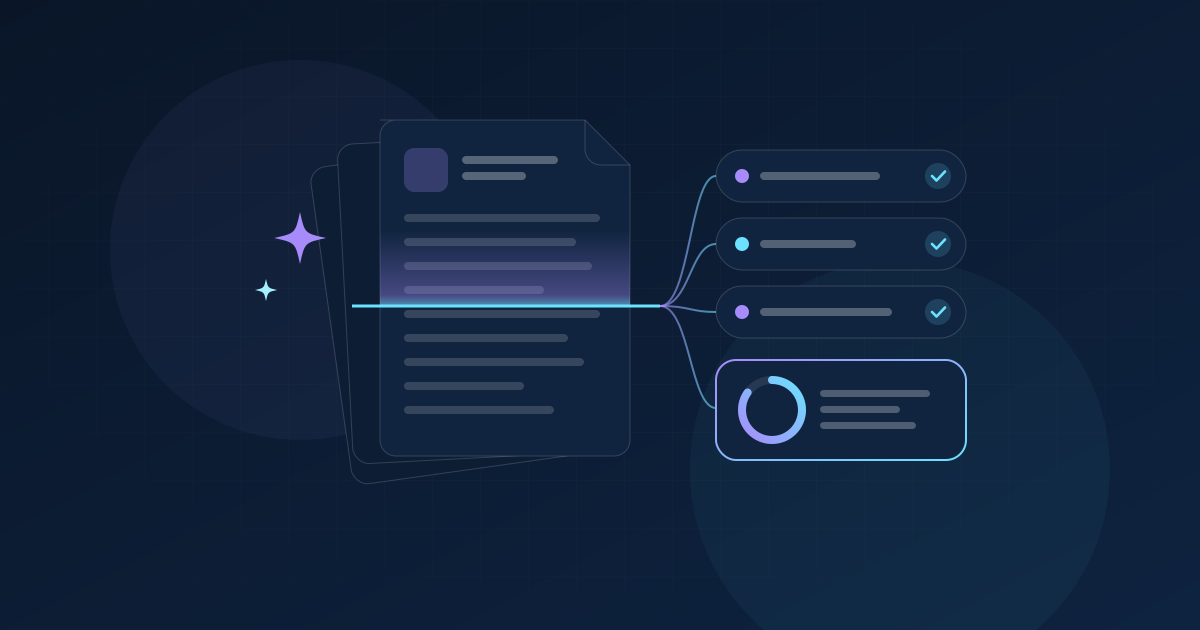
Modern AI solutions automate the entire chain end to end, from reading a document to making sense of it:
- Converting to text with OCR — Scanned or photographed documents are turned into machine-readable text.
- Information extraction (NLP/LLM) — Fields such as name, date, amount, experience, and certifications are extracted from the document automatically.
- Classification and matching — The document type is recognized and matched against criteria (e.g., a job posting or eligibility requirement).
- Scoring and recommendation — Each application is scored against defined criteria, and a recommendation is generated along with its rationale.
A typical evaluation workflow
- Document upload and bulk import
- Automatic field population through OCR and data extraction
- Evaluation with a rules and criteria engine (e.g., minimum experience, required documents)
- Score, missing-document detection, and a summary with rationale
- Human approval (human-in-the-loop): an expert makes the final decision
The key point in this approach is not that AI replaces people; it takes over initial screening and routine checks so experts can focus on the cases that truly require judgment.
Where is it used?
- Recruitment — Resume screening, skills matching, and candidate ranking.
- Finance and insurance — Document checks and preliminary risk assessment for loan and policy applications.
- Public sector, grants, and tenders — Eligibility and completeness checks on application files.
- Compliance and KYC — Verification and consistency checks of identity and compliance documents.
- Procurement — Reviewing supplier and contract documents against standards.
What to watch out for
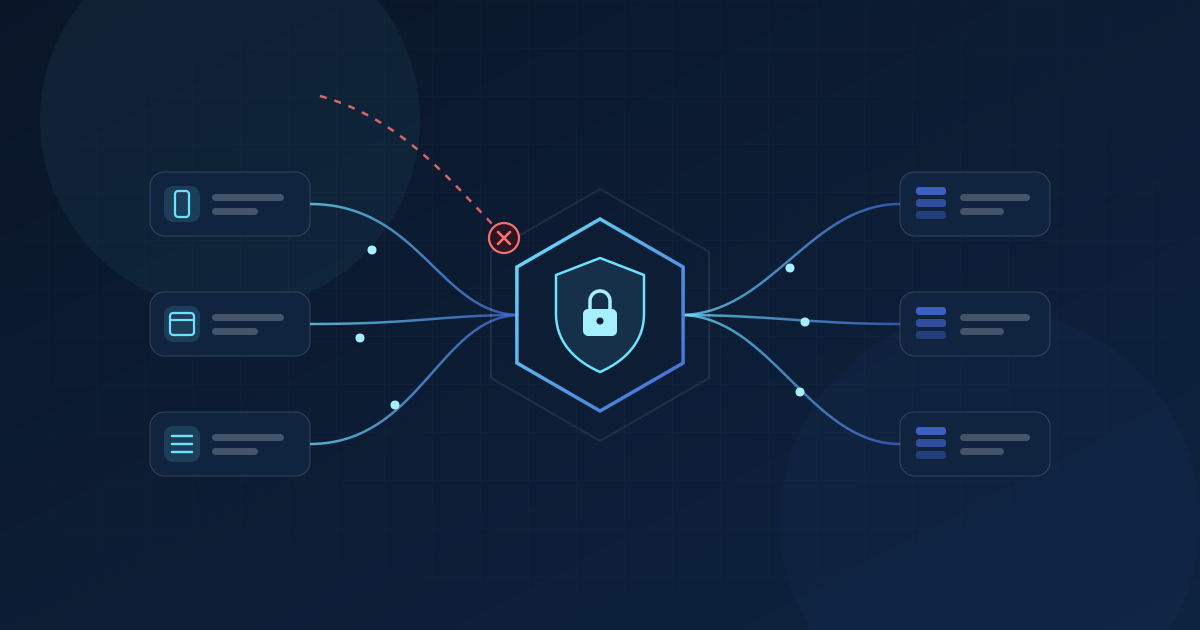
In a well-designed solution, accuracy, explainability, and data security come first. The ability to justify decisions, auditing for bias, compliance with KVKK (Turkey’s personal data protection law) and GDPR, and secure data processing (on your own infrastructure, self-hosted, when needed) determine how trustworthy the process is. Human oversight must always remain part of the chain.