The retail checkout is no longer just a device that takes payments; it is a software platform at the heart of the store, connecting everything from inventory to customer loyalty. The shift from the traditional cash register to cloud-based modern POS systems is one of the most visible steps in retail’s digital transformation.
What is a modern POS, and how is it different from a traditional register?
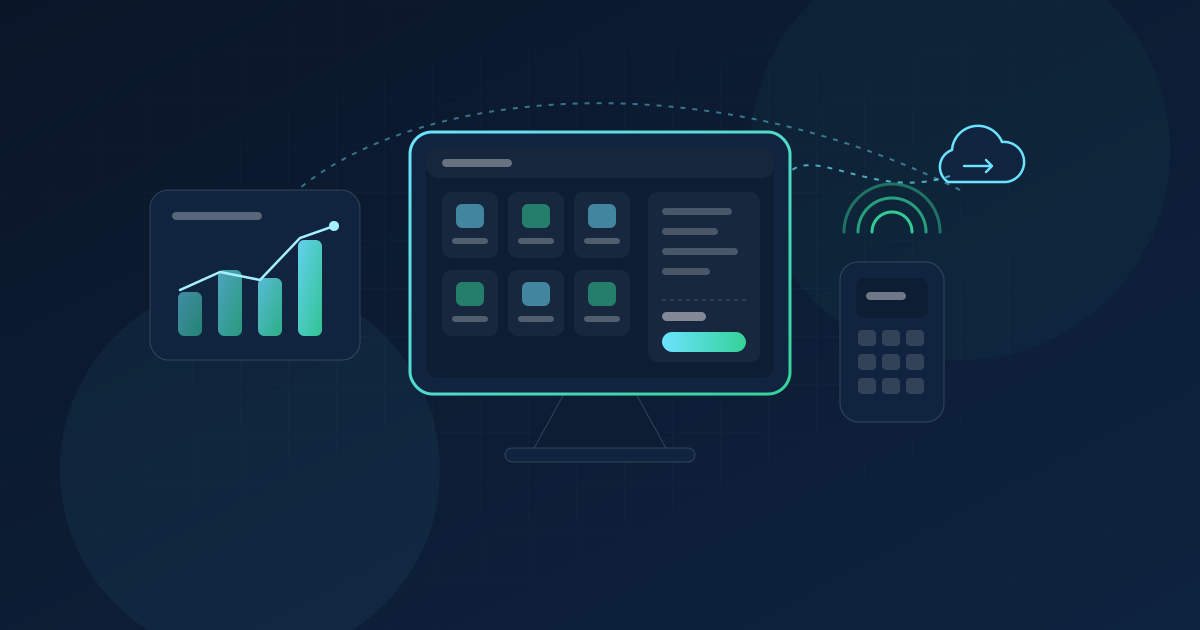
A traditional register is usually a standalone device that does little more than print sales receipts. A modern POS (point of sale), by contrast, is cloud-based software that integrates with other systems and shares data in real time. Beyond sales, it brings inventory, customers, promotions, and reporting together in one place.
Key features of modern POS systems
- Cloud-based architecture — Access to data from anywhere, automatic backups, and centralized management.
- Mobile and tablet checkout — Flexible points of sale using handheld terminals or tablets alongside fixed registers.
- Integrated payments — Credit card, contactless, QR, and mobile wallet payments in a single flow.
- Real-time inventory sync — Inventory updated in real time with every sale.
- Omnichannel — In-store and e-commerce unified on the same inventory and customer data.
- CRM and loyalty — Customer recognition, points and promotions, and personalized offers.
- Reporting and analytics — Real-time performance indicators by revenue, product, and store.
- Offline mode — Sales keep going when the internet drops and sync once the connection returns.
Critical integrations
A POS becomes more valuable with every system it connects to: ERP for inventory and finance, e-invoice / e-archive (Turkey’s GİB e-document system) for legal compliance, payment systems, e-commerce platforms, and dealer/branch management. These integrations turn store operations into a single end-to-end data flow.
Trends shaping retail
- Self-checkout and mobile payments — Self-service and QR/contactless payments that shorten queues.
- AI-driven demand forecasting — Optimizing inventory and promotions based on sales data.
- Data-driven store management — Real-time tracking of branch performance, audits, and operational scores.
Modern retail is about more than a fast checkout; it comes together with auditing store operations, measuring branch performance, and digitizing field processes. Combining checkout data with operational data gives retailers a real competitive advantage.